.webp)
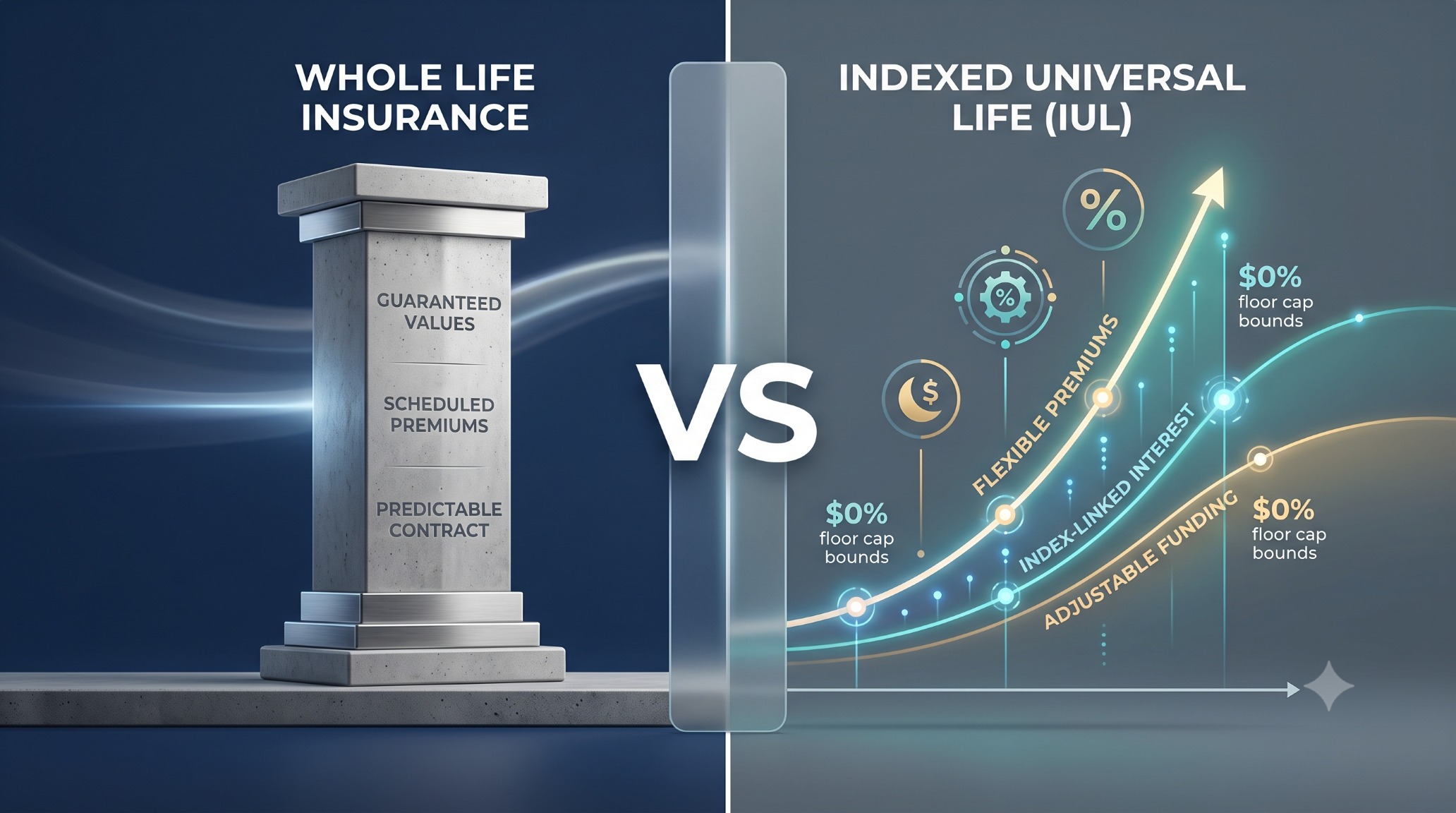
Whole life emphasizes scheduled premiums and contractual cash values. Indexed universal life offers flexible premiums and index-linked interest crediting, but charges, crediting terms, funding levels, and loans can materially affect results. The better fit depends on the need for guarantees, flexibility, affordability, and the ability to monitor the policy over time.
Compare Whole Life and IUL insurance by guarantees, premiums, cash value, policy loans, funding requirements, and long-term risks.
Whole life and indexed universal life (IUL) are both permanent life insurance, but they handle premiums, guarantees, and cash value differently. Whole life emphasizes scheduled premiums and contractual values. IUL offers more flexibility and index-linked interest crediting, but policy charges, crediting terms, funding levels, and loans can materially affect long-term results.
Both policies are designed to provide permanent life insurance when policy requirements are met. Each can build cash value, allow access through withdrawals or policy loans, and provide a death benefit to beneficiaries. Neither should be selected from a sales illustration alone.
Whole life insurance generally uses scheduled premiums and contractual cash values. The policy specifies guaranteed premiums, death benefits, and cash values when its requirements are met. Participating policies may also pay dividends, but dividends are not guaranteed.
Whole life is often considered by people who value predictability and can maintain the required premium for many years. Its tradeoff is cost: permanent guarantees generally require a substantially larger premium than temporary term coverage.
Indexed universal life insurance is permanent coverage with flexible premiums and interest crediting linked to a market index. The policyholder is not invested directly in the index. Credited interest depends on terms such as a floor, cap, participation rate, and spread.
A 0% index-crediting floor does not mean the policy cannot lose cash value. Monthly policy charges, loans, withdrawals, changing crediting terms, and insufficient premiums can reduce cash value or cause a lapse.
Traditional whole life generally follows a scheduled premium. The schedule makes the required commitment easier to understand, although optional paid-up additions or other riders can change total funding.
IUL premiums are flexible within policy limits. Flexibility is not the same as freedom to pay any amount indefinitely. Paying only a low illustrated premium can create future funding pressure if crediting is lower, charges are higher, or loans are taken.
Whole life cash value generally follows the guaranteed schedule in the contract, with possible non-guaranteed dividends on participating policies. IUL cash value changes based on premiums, charges, credited interest, and policy activity. Review both guaranteed and non-guaranteed columns in every illustration.
Both policy types may permit access to available cash value. Loans accrue interest and reduce the amount supporting the policy. Withdrawals can reduce coverage. A policy that lapses or is surrendered with gain may create taxable income, particularly when loans are outstanding. Ask a qualified tax professional about individual circumstances.
Cash-value life insurance is primarily life insurance, not an annuity or retirement account. If the primary goal is future income rather than a death benefit, compare the policy with qualified retirement accounts and appropriate annuity options. An IUL discussion should include loan stress tests, while a whole life discussion should include guaranteed and non-guaranteed values.
Whole life offers more contractual predictability. IUL offers more flexibility but requires greater attention to funding, charges, crediting terms, and loans. The right choice is the policy that meets a real protection need, remains affordable under conservative assumptions, and is understood before the application is signed.