.webp)
An IUL illustration is a hypothetical projection, not a prediction or guarantee. Read the guaranteed and non-guaranteed columns separately, identify the planned premium and maximum charges, review caps and participation rates, and stress-test lower crediting and policy loans. Pay particular attention to any illustrated lapse year or future premium increase.
Learn how to review an IUL illustration, including guaranteed values, planned premiums, policy charges, crediting assumptions, loans, and lapse years.
An indexed universal life illustration shows how a policy could perform under stated assumptions. It is not a prediction or guarantee. The most important task is separating guaranteed values from non-guaranteed values and testing whether the planned premium remains adequate under less favorable crediting, charges, and loan activity.
The guaranteed column applies the guarantees defined in the policy and generally produces much lower values than the illustrated current-assumption column. It can show how sensitive the design is to unfavorable conditions. A policy should not be evaluated only from the more attractive illustrated values.
IUL premiums are flexible within policy limits, but flexibility does not eliminate the need for adequate funding. The illustration may show a planned premium, a minimum premium, or a premium designed for a specific outcome. Ask whether the amount shown is intended merely to keep coverage in force or to support the illustrated cash value.
IUL policies may deduct premium loads, cost-of-insurance charges, administrative charges, rider charges, and surrender charges. Some charges are guaranteed not to exceed a stated maximum, while current charges may be lower. Ask for both current and maximum-charge scenarios.
Cost-of-insurance charges generally increase as the insured ages. This is one reason a design that looks adequately funded in early years may require more premium later.
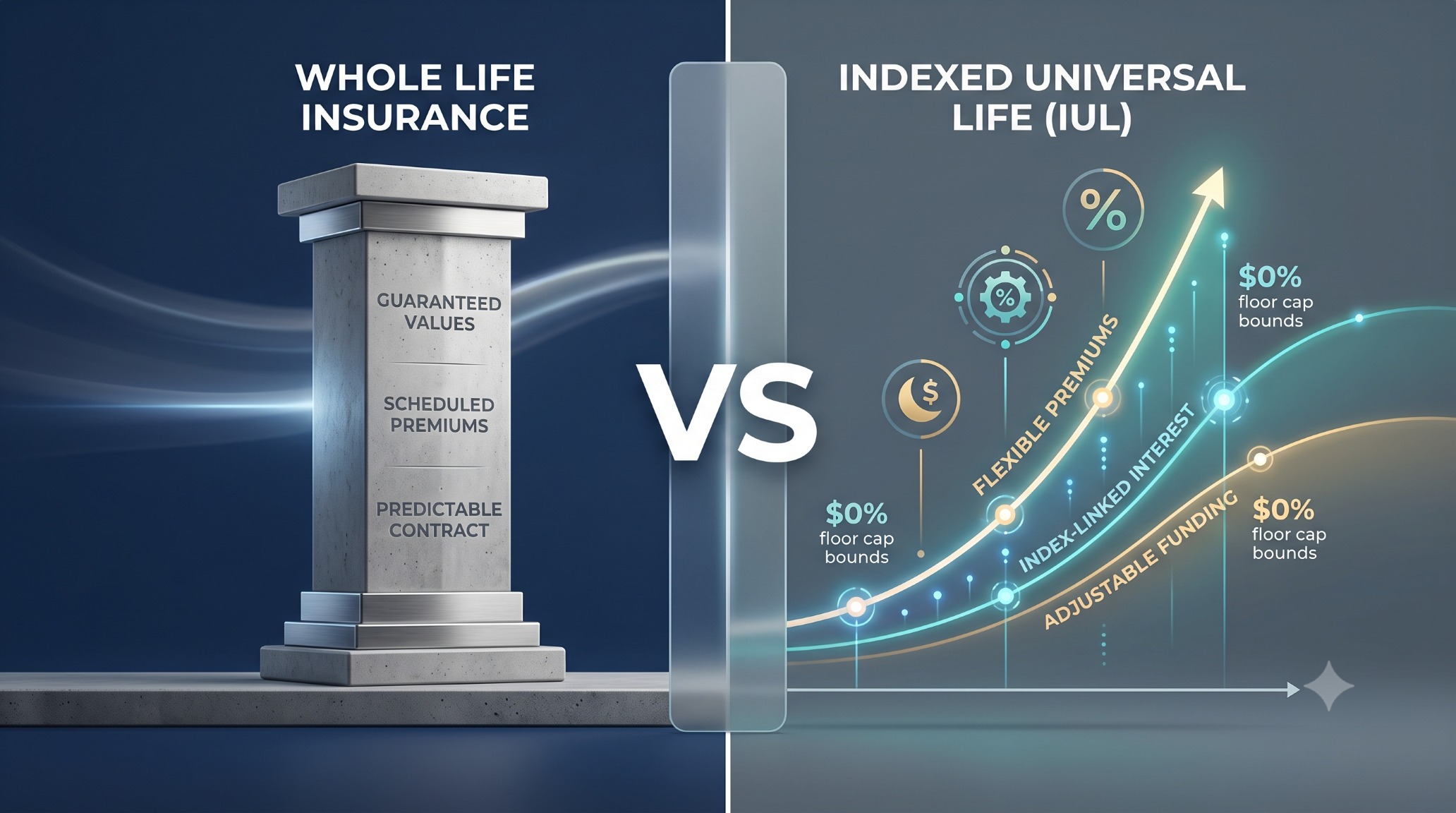
The policyholder is not invested directly in an index. Interest is calculated using the policy’s crediting formula. Review the floor, cap, participation rate, spread, index period, and whether those terms can change.
A 0% floor does not prevent cash value from declining after policy charges, loans, or withdrawals.
Review death benefit, account value, cash surrender value, and premium outlay in both columns. Ask the licensed professional to explain any year where the values diverge sharply or coverage ends.
Request supplemental scenarios using lower illustrated crediting rates. Also ask what happens under maximum policy charges and when credits are unfavorable for several years. The purpose is not to predict the future; it is to understand how much funding margin the design contains.
Illustrations involving policy loans deserve additional scrutiny. Determine the loan type, loan interest rate, assumed credited interest on borrowed amounts, and the year loans begin. Loans accrue interest and reduce the values supporting coverage.
An illustration may show a policy ending before the assumed life expectancy or maturity age. If coverage lapses, the death benefit ends. Review both the illustrated lapse year and the guaranteed lapse year, and ask what additional funding would be required to extend coverage.
The original illustration becomes less useful as actual premiums, charges, crediting, withdrawals, and loans develop. Request an in-force illustration periodically and whenever funding or loan activity changes materially.
A useful IUL illustration makes the policy’s moving parts visible. Focus on guarantees, premium sufficiency, charges, crediting assumptions, loan mechanics, and lapse years. If the design works only under optimistic assumptions, it may not provide enough margin for a long-term insurance commitment.