.webp)
Learn how to protect your household under one roof. Discover tailored family life insurance plans and get professional, pressure-free advice from a licensed local advisor.

Securing the financial future of your household requires more than a simple savings account or a vague feeling of optimism. It requires a deliberate, long-term plan designed to protect your dependents from unstable economic hardships. For millions of American households, the right life insurance for families is not a luxury; it is the core pillar that makes every other financial goal achievable.
Even though life insurance is so important, many people do not understand it or have enough coverage. In fact, almost half of American families say they are not properly covered, and many have no policy at all. People often get confused by the different types of policies or think they cost more than they really do.
Shopping for insurance can be confusing. Many websites and call centers treat your family's safety like just another sale. Real protection comes from finding a plan that actually fits your family's needs and budget.
Whether you have two incomes, one income, or your family is changing, setting up your insurance the right way helps your loved ones stay in their home, pay for school, and keep life on track if something unexpected happens. This guide will show you how to build a family life insurance plan that really works when you need it.
Yes, both parents need life insurance, even if one does not earn a paycheck. Families with two incomes rely on both to pay the bills, and stay-at-home parents do important work at home that would cost a lot to replace.
In a dual-income configuration, the household economy is built upon two distinct revenue streams. The loss of either stream can immediately interrupt your family's lifestyle, creating challenges with mortgage payments, auto loans, and everyday expenses. When determining the best life insurance for parents, evaluating the direct income replacement value is always the first analytical step.
Your coverage should cover your take-home pay, any debts, and future goals like college or retirement savings. If only one parent is insured, the other could be left with all the bills at a time when they may need to take time off work to care for the family.
According to Kiplinger, while some people use general rules like getting life insurance equal to eight times their annual income, these guidelines may not fit everyone, and your actual coverage should be tailored to your specific needs, including your debts, your children's ages, your monthly expenses, and any other loans you may have.
A common and costly mistake is assuming that a parent who does not earn a traditional salary does not need insurance. This oversight can leave a family financially exposed in ways that are not immediately obvious until a crisis occurs. Specialized life insurance for stay-at-home parents addresses the real economic value of domestic labor and household management.
If a stay-at-home spouse passes away, the surviving partner must suddenly pay for full-time childcare, household maintenance services, transportation logistics, school coordination, and educational support. Research published by independent labor analysts estimates that replacing the full scope of domestic services provided by a stay-at-home parent would cost the equivalent of a significant full-time salary each year.
If the working parent has to work less or pay for help at home, life insurance for the stay-at-home parent can cover those costs, so you do not have to dip into savings. These policies are usually cheaper, but make sure you get enough to pay for help for a few years.

Having two policies is not enough. Many couples just buy the same policy for both parents without checking if they actually work together. Make sure your coverage matches what your family really needs.
Most families should have life insurance equal to 10 to 12 times their annual income, plus any major debts, such as a mortgage. Adjust this number based on your bills, your kids' ages, college plans, and how much you expect costs to go up.
Do not just pick a random number for your coverage. Many advisors use the Human Life Value method, which adds up what you will earn and provide for your family over time. This way, you get a more accurate amount.
According to LIMRA, when considering your life insurance needs, it is important to look beyond covering just burial and final expenses and also factor in living benefits and potential retirement income. To estimate appropriate coverage, start with your current annual salary and multiply it by the number of years until your youngest child becomes financially independent or your mortgage is paid off. Then add anticipated major expenses, such as private college tuition, planned home renovations, estate taxes, and business succession obligations, and subtract your liquid assets, such as savings and investment balances. This approach can help ensure your family's life insurance plan is based on realistic financial needs rather than guesswork, especially considering your household's needs under real-world financial conditions.
When evaluating how much life insurance a family of 4 needs, you must carefully account for the long-term expenses of raising two children from their current ages to full financial independence. Consider a representative scenario: a household with two parents, a three-year-old, and an infant. If the primary income earner passes away, the surviving parent faces nearly two decades of ongoing child-rearing costs before both children reach adulthood.
A simple online quote might not be enough once you factor in inflation, higher healthcare costs, private school, or college, which could cost over $250,000 per child by the time your kids are ready for university.
To fully protect a family of four, your life insurance should cover all of these:
One of the most important aspects of a sound family life insurance plan is recognizing that your coverage needs evolve as your family's financial situation changes. A policy that was adequate when you purchased your first home may be insufficient after a salary increase, a new child, or a significant mortgage refinance.
Review your life insurance every 3 years, or after major changes like having a baby, buying a house, getting divorced or remarried, taking on new debt, or losing someone who helped support your family.

Young families commonly experience competing financial demands, including entry-level salaries, student loan repayment schedules, initial home purchases, and the exponential cost increases that accompany raising children through their early years. Finding the best life insurance plan for young families on a budget demands balancing genuinely affordable premiums with strong, future-proof protection.
The good news is that life insurance is cheapest when you are young and healthy. Your rate stays the same for the whole policy term. For example, a healthy 28-year-old can usually get a 20-year, $500,000 policy for about the price of a monthly streaming subscription. It is smart to lock in a low rate before you get older or develop health issues.
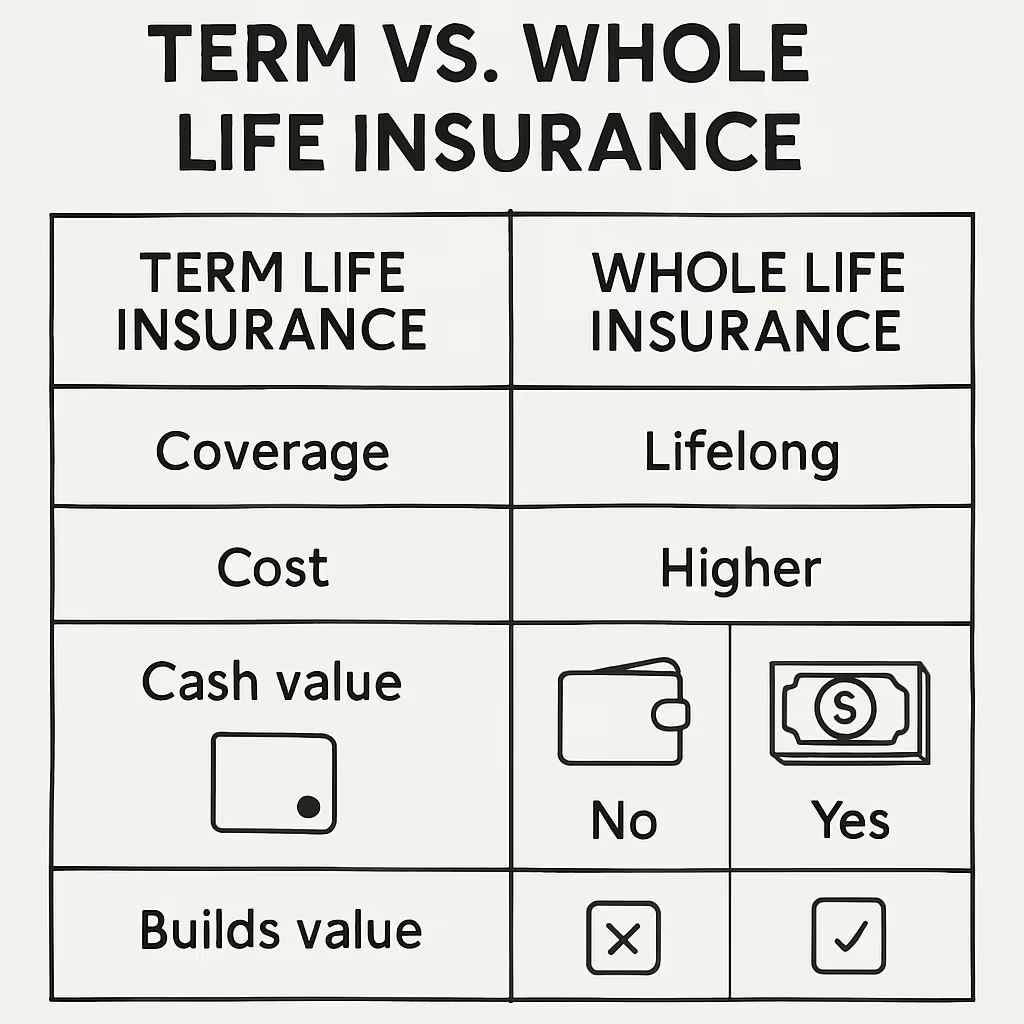
For most growing families, term life insurance serves as the primary financial backup system. This type of coverage delivers a straightforward, guaranteed death benefit for a specific period, typically available in 10-, 15-, 20-, 25-, or 30-year increments. Because it focuses purely on protection without the complexity of cash value accumulation or investment features, the premiums remain very affordable relative to the coverage amount.
Term life insurance fits families because you need the most coverage when your kids are young, your mortgage is big, and your income is still growing. As your kids get older and you pay off your mortgage, you need less coverage, which matches how term policies work.
A good way to save money and still get enough coverage is to use term laddering. Instead of one big 30-year policy, you buy a few smaller ones with different lengths. This gives you more coverage when you need it most, and your costs drop as your needs go down.
Here is a practical example of how term laddering works for a young couple:
When each policy ends, your monthly payments get smaller, just like your bills. You can also compare different companies to find the best price for each policy.
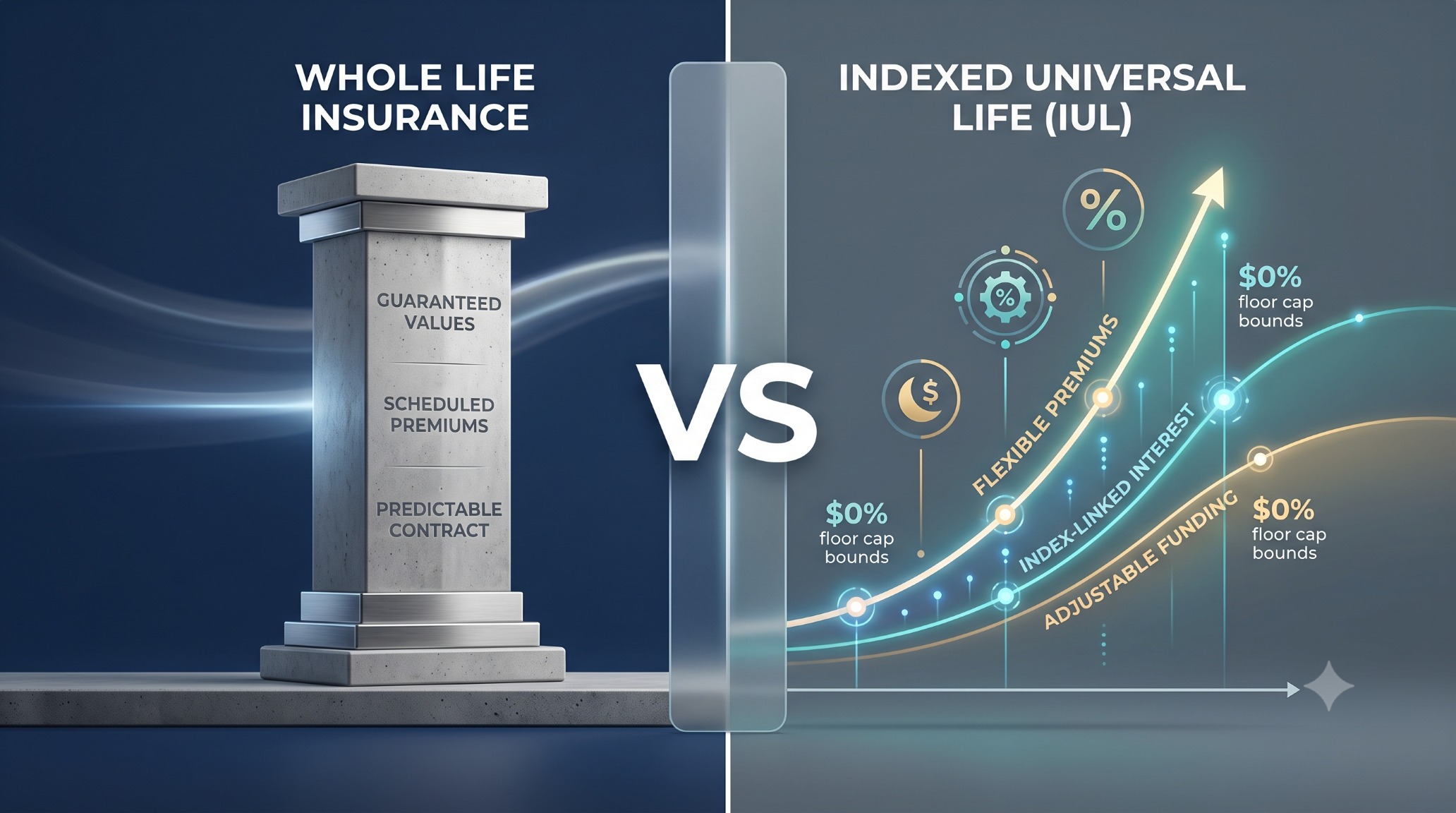
Term life insurance is the best choice for most families, but some people may want to add a permanent life insurance policy. Permanent policies like Whole Life or Indexed Universal Life last your whole life and build up cash value you can use later.
Permanent life insurance can help if you want to leave money for estate costs, have a child who will need support as an adult, run a family business, or have already saved as much as you can in other retirement accounts. An independent advisor can help you decide if this is right for your family.

No. You should not name a minor child as a direct life insurance beneficiary. Insurance companies cannot legally pay a large death benefit directly to a minor. If you name a minor child, the funds will be held by the state probate court, and a judge will appoint a legal guardian to manage the money, creating costly legal delays, administrative fees, and a loss of control over how the funds are used for your children's care.
To ensure your children can access policy funds promptly and according to your specific wishes, you should work with an advisor and an estate planning attorney to establish a proper legal framework. One of the most effective approaches is to establish a revocable living trust and name it as the policy's primary beneficiary. Within the trust documents, you can name a trustee of your choosing and give detailed instructions for how the funds should be distributed for your children's care, education, and long-term well-being.
This approach gives you complete control over the timing and conditions of fund distribution. For example, you can specify that a portion of the funds be released immediately for housing and living expenses, that a second tranche be held for college tuition, and that a final portion be released to each child at a specific age, such as 25 or 30, to prevent large sums from being received before your children have the financial maturity to manage them responsibly.
Alternatively, you can utilize the Uniform Transfers to Minors Act (UTMA) designation by naming a trusted adult as the custodian for the minor child under your state's UTMA guidelines. This simpler step ensures that policies proceed bypass probate court and are immediately available to support your children without the cost or complexity of establishing a formal trust. However, UTMA custodianships automatically terminate when the child reaches 18 or 21, depending on state law, meaning the child receives full control of the remaining funds at that relatively young age.
When you set up your policy, consider adding a family income benefit rider. Most life insurance policies pay out in a lump sum, which can be hard to manage during a tough time. Monthly payments can make things easier and help avoid mistakes.
A family income benefit rider gives your family monthly payments instead of a lump sum. It works like a paycheck, helping cover bills and living costs without the stress of handling a big payout all at once.
Beyond the family income benefit rider, several other rider options can meaningfully enhance your household's protection:

In today's digital landscape, many families first look for life insurance for families through automated quote engines, comparison aggregators, and app-based insurtech platforms. While these tools promise fast results and frictionless applications, they routinely operate as lead-generation engines whose primary business model is selling your personal contact information to multiple competing call centers simultaneously.
After that, you may get lots of calls and texts from salespeople you do not know, all trying to make a sale. These online systems do not know what your family really needs, so you could end up with the wrong coverage or pay too much.
Independent insurance advisors differ from agents who work only for one company. They can compare plans from many top companies and help you find the best price and coverage for your situation.
This is especially helpful if you have health issues, work in a high-risk job, or have other factors that could affect your rates. A good independent advisor knows which companies are best for your situation and can help you get approved at the best rate.
Life Policy Express works differently. They connect you with a local advisor who understands family protection, instead of sending your info to a big call center. You get personal help and answers to your questions without sales pressure.
Your local advisor can compare plans from top companies to find one that fits your budget and your family's needs. You get a clear, personalized quote so you can feel confident about your choice.
Life insurance is not something you buy once and forget. It is part of your family's financial plan and should be checked and updated as your life changes. The best plans treat life insurance as something that grows with your family, such as new kids, new homes, new income, and new goals.
A good plan has the right coverage, the right setup, the right beneficiaries, smart add-ons, and regular check-ins with a professional. Online tools cannot do all of this for a real family.
The families best protected are those who spend a little time with a good independent advisor. They get clear, personal advice and know their family's future is safe, no matter what happens.
Protecting your household under one roof requires a family life insurance plan that adapts to your changing needs across every phase of life. Do not leave your family's financial security to a generic online algorithm or a high-pressure call center that treats your household's safety as a lead to be monetized.