.webp)
Whole life insurance can supplement retirement income through withdrawals or policy loans, but it is not guaranteed income. Accessing cash value reduces policy benefits, interest can compound, and a lapse may create taxes. The strategy is most suitable when permanent coverage is needed and the policy has been conservatively funded and monitored.
Whole life cash value may supplement retirement income, but loans and withdrawals reduce policy benefits and can increase lapse or tax risk. Learn when the strategy may fit, what to stress-test, and when an annuity may better match an income goal.
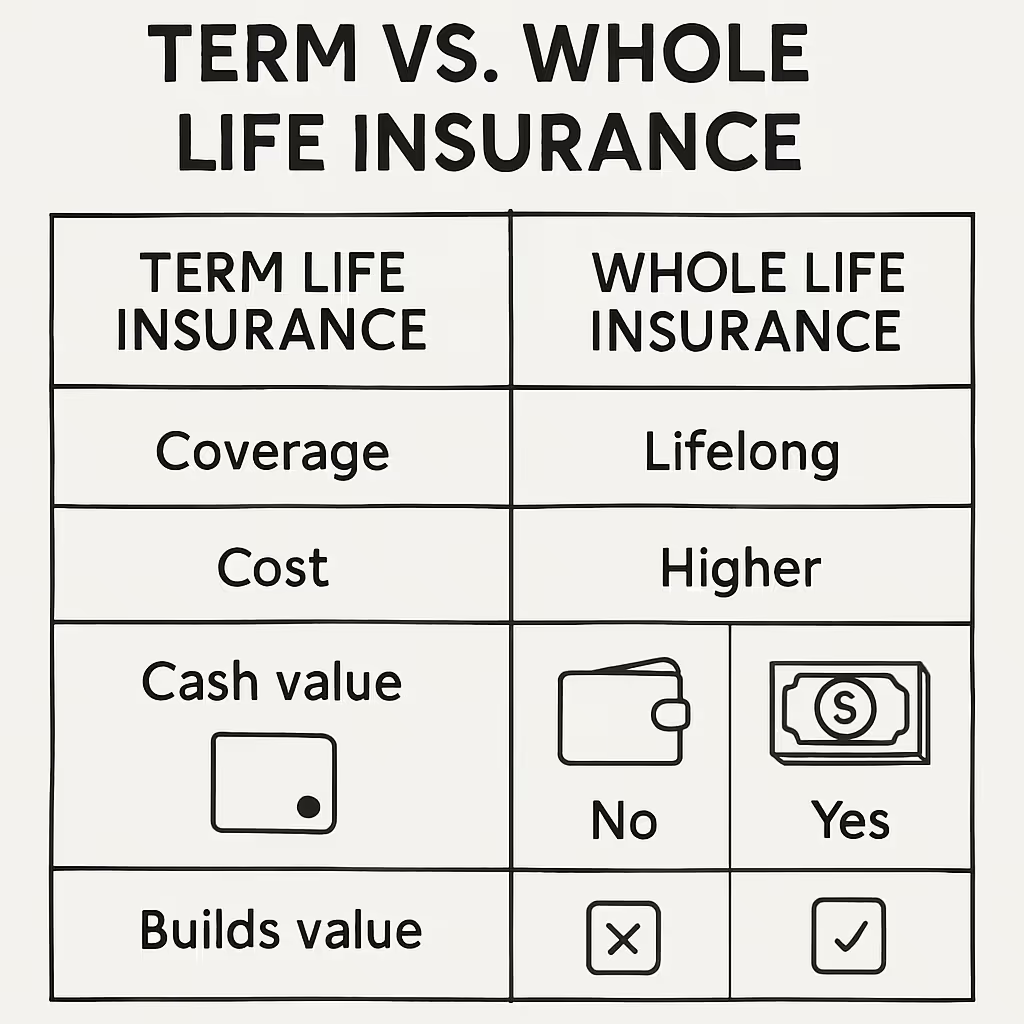
Whole life insurance can create cash value that a policy owner may access later through withdrawals or policy loans. That value can supplement other retirement resources, but it is not the same as a pension, Social Security benefit, or annuity income guarantee. The contract is designed primarily to provide lifelong death-benefit protection when required premiums are paid and policy terms are satisfied.
A responsible analysis starts with the insurance need. If permanent coverage is not valuable to you, buying an expensive permanent policy mainly for future income may be inefficient. Review our whole life insurance guide for the basic guarantees, costs, and tradeoffs.
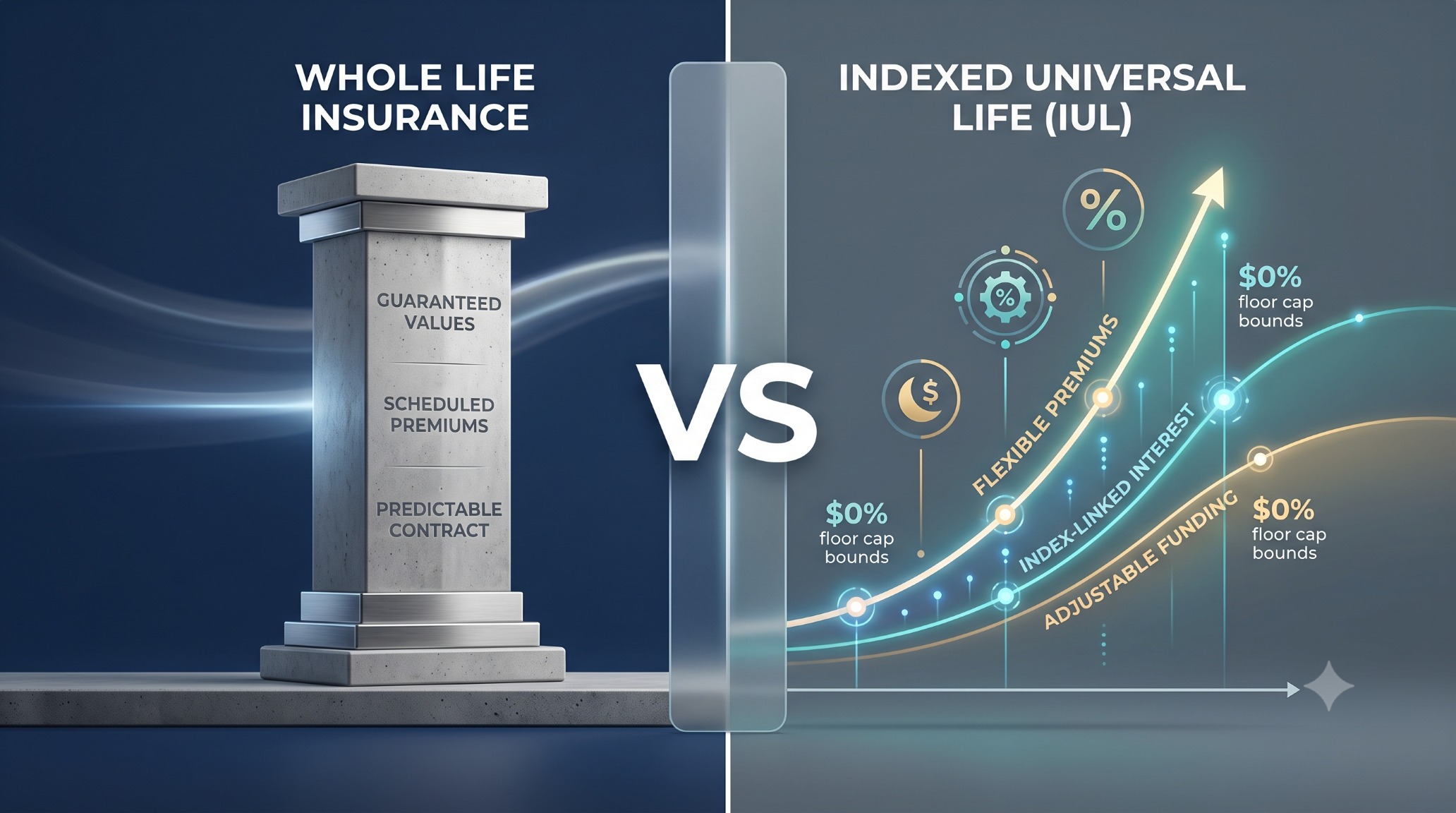
Part of a whole life premium supports insurance costs and expenses, while the contract develops guaranteed cash value according to its schedule. Some participating policies may also pay dividends, but dividends are not guaranteed. Dividends can be taken in cash, used to reduce premiums, left with the insurer, or used to buy additional insurance, depending on the contract.
Cash value usually takes time to build. Early values may be meaningfully lower than premiums paid, so whole life generally requires a long time horizon and reliable cash flow.
A withdrawal permanently removes value from the policy and usually reduces the death benefit. Contract rules determine how much can be withdrawn and what values remain.
A policy loan uses available policy value as collateral. Interest accrues under the contract, and unpaid interest may be added to the balance. The outstanding balance and interest generally reduce net cash value and the death benefit available to beneficiaries.
Marketing language sometimes says the policy continues growing while money is used. That statement needs qualification. Contractual values may continue developing, but the loan is still a debt. Dividend treatment can differ, loan interest can compound, and net benefits must be measured after subtracting the loan.
It is misleading to describe all policy distributions as tax-free. Tax treatment depends on the policy, the owner’s basis, whether the contract is a modified endowment contract, and whether it stays in force. Loans from a non-MEC policy are generally not treated as income when taken, but a later lapse or surrender can make gain taxable. Distributions from a MEC generally receive less favorable treatment.
Tax rules are individual and can change. Ask a qualified tax professional to review a proposed strategy before relying on it for retirement spending.
A growing loan balance can consume the value supporting a policy. If remaining value becomes insufficient and the owner does not add premium or reduce the loan, the policy may lapse. A lapse ends coverage and may create an unexpected tax bill when the contract has gain—even if the policy owner no longer has the borrowed money available.
This risk can increase when distributions begin earlier than planned, loans are larger than illustrated, interest rates are higher, dividends are lower, or retirement lasts longer than expected.
An illustration is a projection, not a promise. Separate guaranteed values from non-guaranteed values, and ask the agent to show unfavorable scenarios rather than only a preferred outcome.
Whole life and annuities solve different primary problems. Whole life is life insurance with cash value. An annuity is designed for accumulation and/or income, and certain annuity options can contractually guarantee payments for life, subject to the insurer’s claims-paying ability.
If the primary goal is leaving a death benefit while maintaining access to cash value, whole life may deserve consideration. If the primary goal is maximizing predictable lifetime income, an annuity may align more directly. Liquidity, surrender charges, taxation, inflation risk, beneficiary goals, and insurer strength should all be compared.
The strongest recommendation may use neither product, one product, or both as part of a broader plan. A product comparison should begin with the job the money needs to do.
Request an in-force illustration at least annually and after any material change. Compare current values with prior projections, confirm the loan balance and interest, and test whether planned distributions remain sustainable. Revisit the strategy after changes in dividends, loan rates, tax circumstances, health, spending, or estate goals.
Monitoring is not optional. A plan that appeared durable at issue can become fragile after years of distributions or changing assumptions.
Whole life cash value can be a flexible supplemental resource for someone who also needs permanent protection and can fund the policy for the long term. It should not be presented as automatically tax-free, risk-free, or guaranteed retirement income. Compare the strategy with retirement accounts and annuities, use conservative scenarios, and maintain a clear plan for monitoring loans, benefits, and lapse risk.