.webp)
IUL is permanent life insurance with a death benefit and index-linked cash-value crediting. A fixed indexed annuity is primarily an accumulation and income contract. IUL may fit a durable protection need; an annuity may better fit guaranteed-income objectives. Compare guarantees, charges, liquidity, taxes, and the consequences of loans or withdrawals.
Compare IUL and fixed indexed annuities by primary purpose, guarantees, index crediting, underwriting, liquidity, death benefits, taxes, and income.
Indexed universal life insurance and fixed indexed annuities can both use index-linked interest-crediting formulas, but they serve different primary purposes. IUL is life insurance with a death benefit. A fixed indexed annuity is an accumulation and income contract. The better fit depends on whether the central need is protection, retirement income, asset accumulation, or a combination.
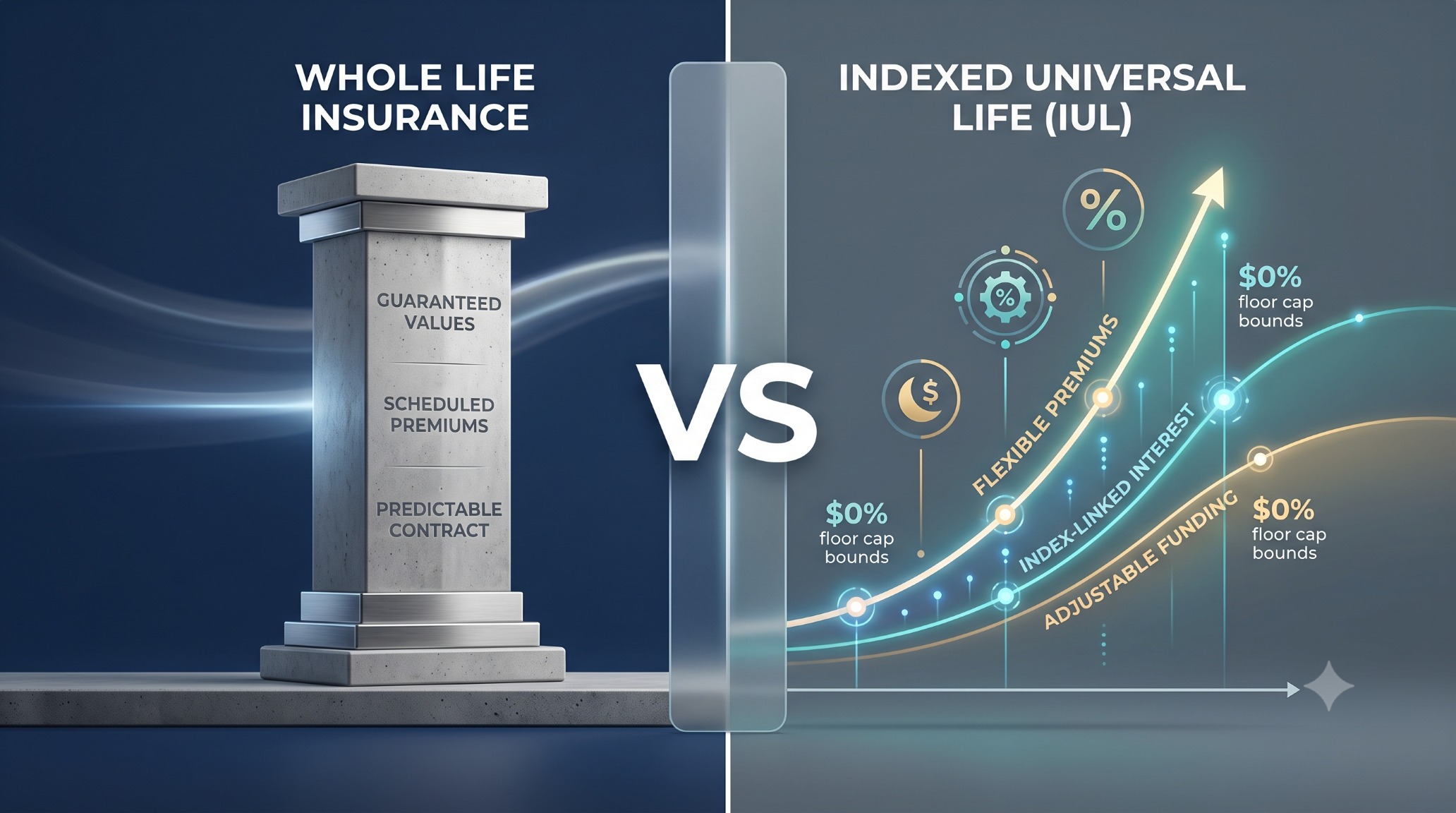
Indexed universal life insurance is permanent life insurance. After policy charges are deducted, available cash value may receive interest through a formula linked to a market index. The owner is not invested directly in the index.
IUL values depend on premiums, cost-of-insurance charges, other policy expenses, crediting terms, loans, and withdrawals. The policy can lapse if values become insufficient.
A fixed indexed annuity is an insurance contract designed primarily for tax-deferred accumulation and future income. Interest may be credited using changes in a market index, subject to the contract’s formula, caps, participation rates, spreads, and minimum guarantees. The owner is not invested directly in the index.
Annuities can include surrender periods, withdrawal limits, and optional income riders. Guarantees depend on the issuing insurer’s claims-paying ability.
IUL should begin with a legitimate need for a death benefit. Cash value and possible access during life are secondary features of the insurance contract.
A fixed indexed annuity is generally considered when the central goal is preserving principal under contract guarantees, accumulating tax-deferred value, or creating an income stream. It is not a substitute for life insurance when a substantial death benefit is required.
IUL normally requires life insurance underwriting based on age, health, tobacco use, medical history, and other factors. A fixed indexed annuity generally does not require life underwriting, although contract eligibility, suitability, best-interest review, and funding-source rules apply.
Both products may reference an index, but their formulas and charges differ. Do not compare only the illustrated crediting rate. Review the floor, cap, participation rate, spread, index period, and whether those terms can change.
With IUL, policy charges are deducted separately and can reduce cash value even when an index segment receives a 0% credit. With a fixed indexed annuity, contract value and withdrawals are governed by annuity guarantees, surrender terms, and any rider provisions.
IUL may permit withdrawals and policy loans against available value. Loans accrue interest, reduce net policy values, and can increase lapse risk. A lapse with gain and an outstanding loan may have tax consequences.
Annuities may permit penalty-free withdrawals up to a contract limit. Larger withdrawals during the surrender period can trigger surrender charges and may affect income guarantees. Withdrawals may also be subject to income tax and, in some situations, an additional federal tax before age 59½.
An IUL loan strategy does not automatically guarantee lifetime income. Its durability depends on policy performance, funding, charges, loan activity, and continued coverage.
An annuity may offer contractual lifetime-income options through annuitization or an optional income rider. The details vary, and riders can carry charges and restrictions. Compare the income base with the actual contract value; they are not necessarily the same amount.
IUL is designed to provide a life insurance death benefit, reduced by applicable loans or withdrawals. A fixed indexed annuity may pay a remaining account value or contractual death benefit, but it is not designed to replace the leverage of life insurance protection.
Both contracts can provide tax deferral while values remain inside the contract, but distribution rules differ. Life insurance distributions depend on policy basis, modified endowment contract status, loans, surrender, and lapse. Annuity withdrawals generally treat gain as taxable before basis under federal rules, subject to contract and tax circumstances.
Tax rules are individual and can change. Consult a qualified tax professional before moving money or relying on a distribution strategy.
Some households have both a protection need and a retirement-income need. That does not mean both products are automatically appropriate. Each contract should solve a separate, documented problem and remain affordable without compromising emergency liquidity or other priorities.
Choose the contract by purpose. IUL is life insurance first, with cash-value features and policy-management risk. A fixed indexed annuity is an accumulation or income contract, with surrender and distribution considerations. A clear comparison should start with the financial problem—not with the index used in the crediting formula.